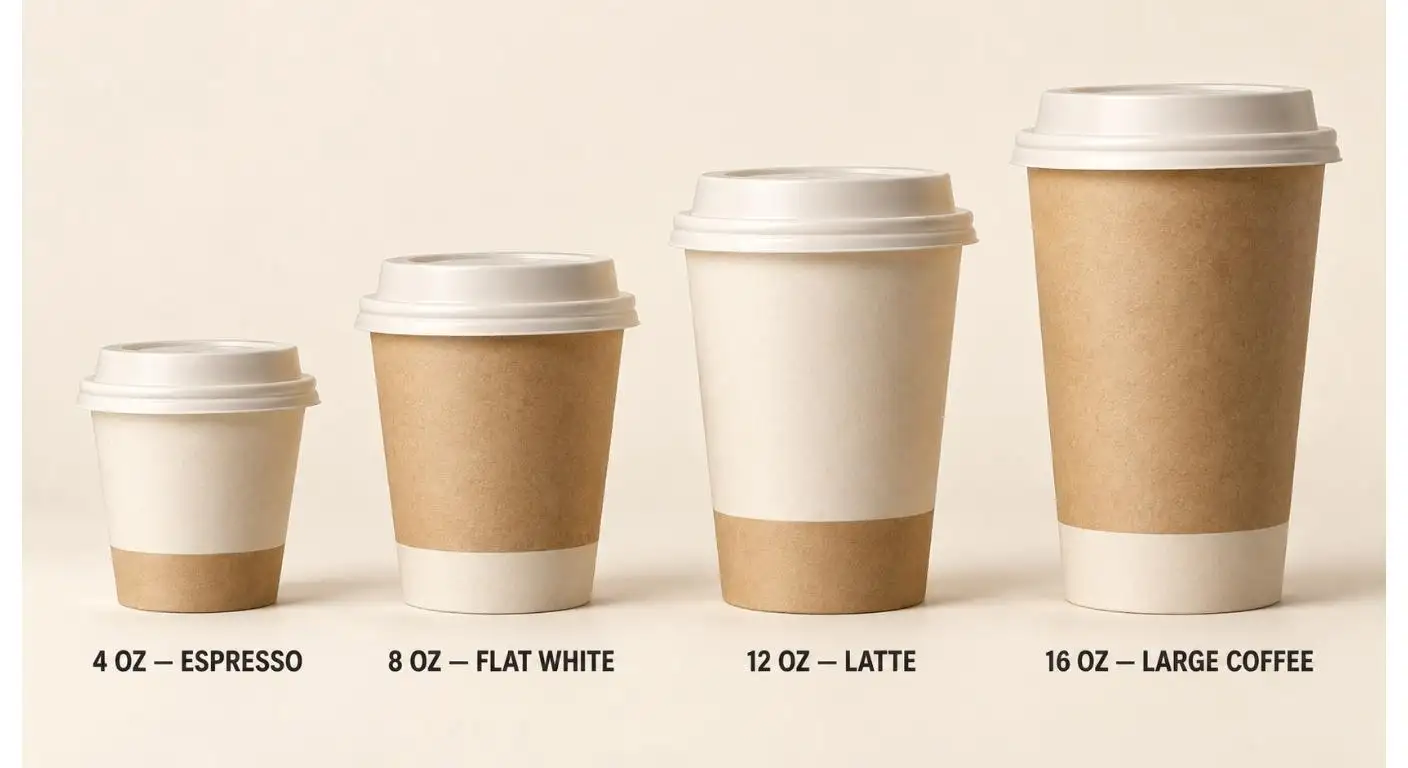
Aktualisierte 2 Stunden vor
Individuelle Kaffeeverpackung: Wie man ein vollständiges Markensystem aufbaut

ypak.coffee
DIE YPAK PACKAGING GROUP wurde gegründet in 2011 und gebildet mit 3 Unternehmen mit Sitz in Hongkong, Dongguan und Foshan. Wir sind zu einem der größten Hersteller von Kaffeesäcken in China geworden. Wir verwenden die besten WIPF-Ventile aus der Schweiz, um Ihren Kaffee frisch zu halten.
Halte dich an die Plastikverbotspolitik ein, die in vielen verschiedenen Ländern verhängt wurde, Wir haben nachhaltige Verpackungstüten erforscht und entwickelt, wie RECYCELBARE und KOMPOSTIERBARE Beutel.
Keine Mindestmenge, Farbplatten sind bei unserem HP 25K INDIGO DIGITALDRUCKSERVICE KEINE FARBPLATTEN ERFORDERLICH..
Sie sind herzlich eingeladen, YPAK zu besuchen.
maßgefertigte Kaffeeverpackung
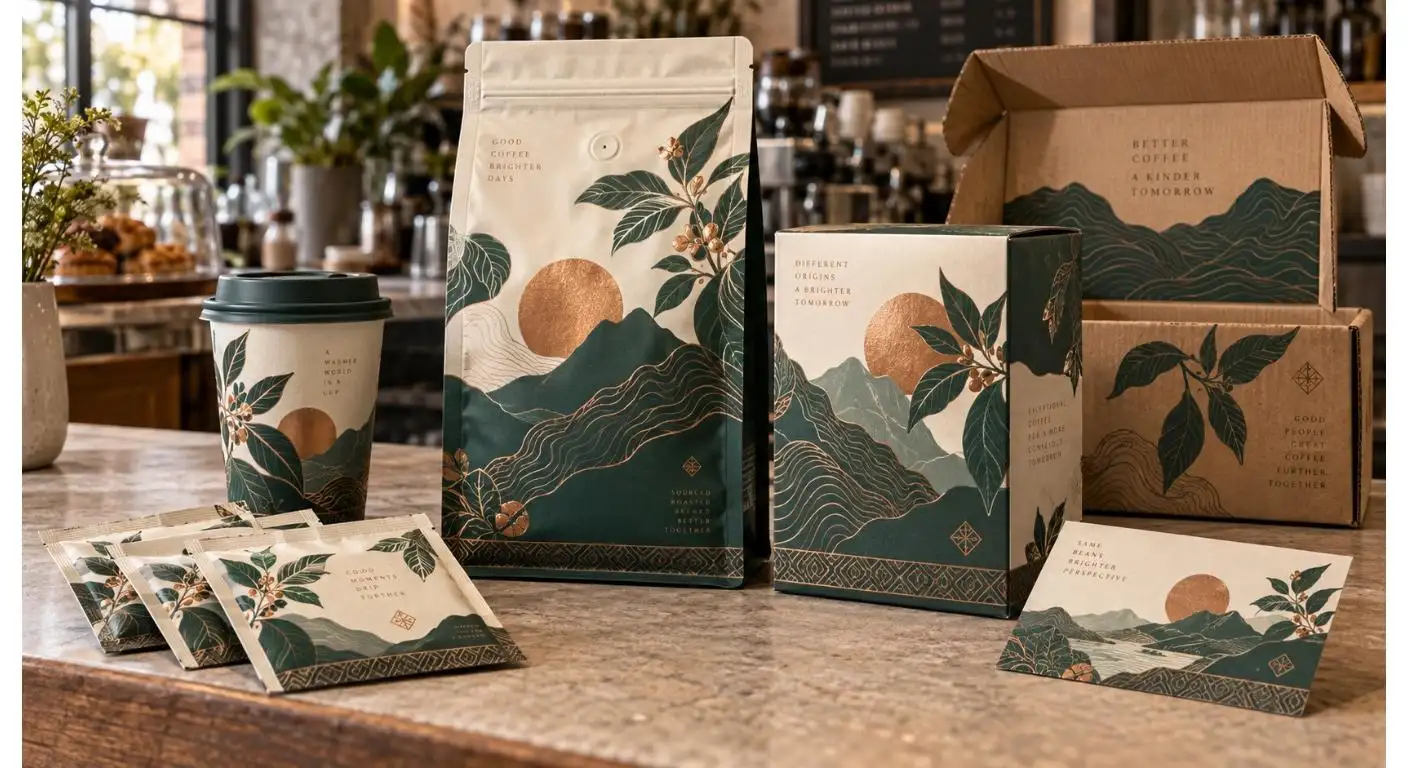
When people think about custom coffee packaging, they often imagine a single bag design. In Wirklichkeit, a customer's first contact with a coffee brand may be a retail pouch, Abonnementbox, takeaway cup, sample pouch, drip coffee carton, Geschenkbox, oder Versandkarton.
When each format is developed separately, Farben, Materialien, Typografie, Produktinformation, and opening experiences can quickly become inconsistent. A better approach is to create a packaging system that protects coffee quality, communicates a recognizable brand identity, and remains flexible enough for future products.
This guide is intended for brands developing coffee packaging for the first time, redesigning an existing package, or expanding from one format into a coordinated product range.
Beginnen Sie mit dem Marke Position
Before selecting a bag or box, define how customers should perceive the coffee. A traditional roaster, minimalist specialty brand, luxury gift company, and convenience-focused subscription service will require different packaging systems.
Clarify the brand's:
- Primary customer
- Price position
- Coffee origin story
- Retail environment
- Visual personality
- Sustainability priorities
- Main sales channels
- Planned product expansion
These decisions should guide every packaging format. A natural kraft appearance may suit an origin-focused brand, while restrained typography and controlled colors may better support a contemporary premium position.
Map Every Customer Touchpoint
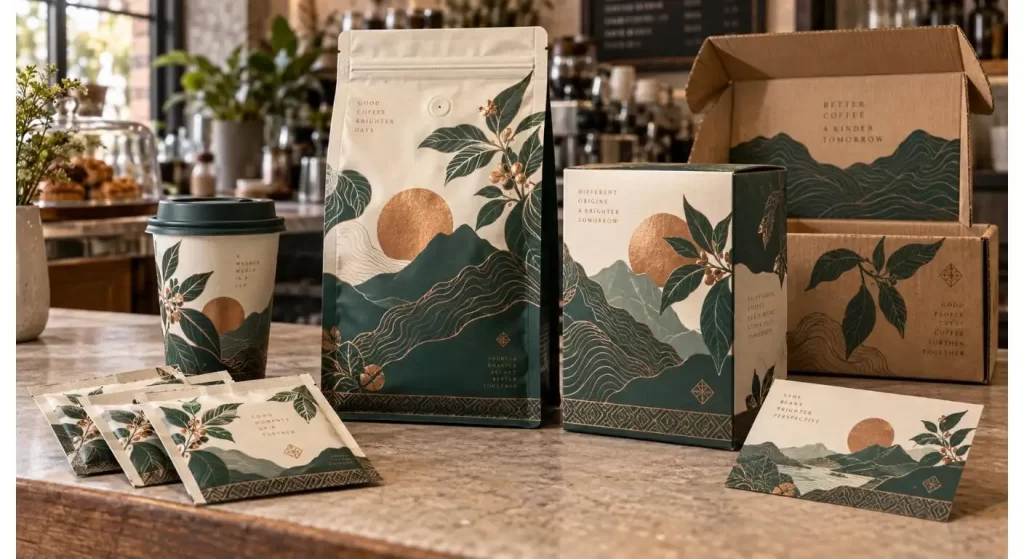
Identify every point at which the packaging is seen, handled, Geöffnet, Gelagert, and disposed of. This may include the primary coffee bag, product label, Verkaufsbox, takeaway cup, delivery carton, insert card, and gift box.
Not every component requires complex printing. Decide which items deliver the main brand experience and which primarily communicate product or handling information.
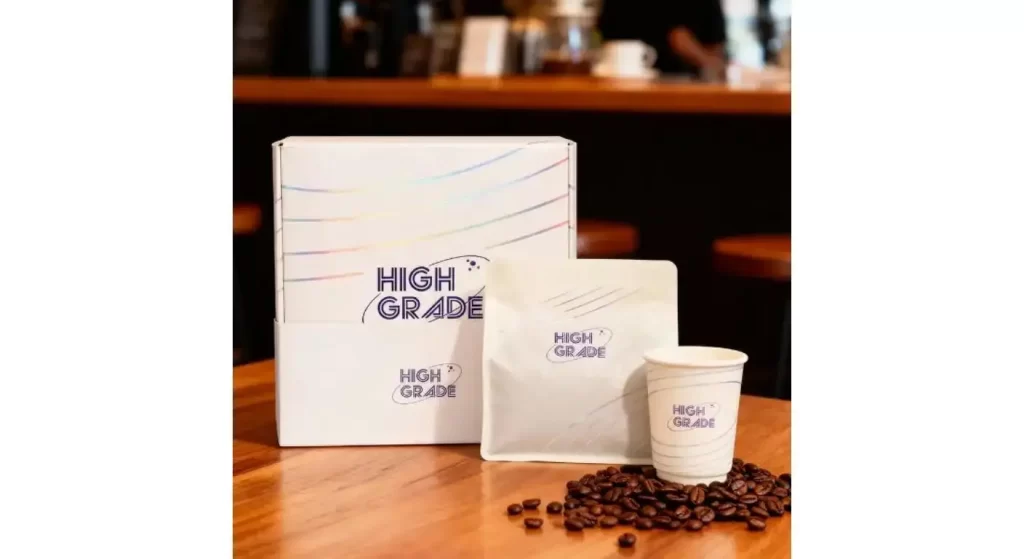
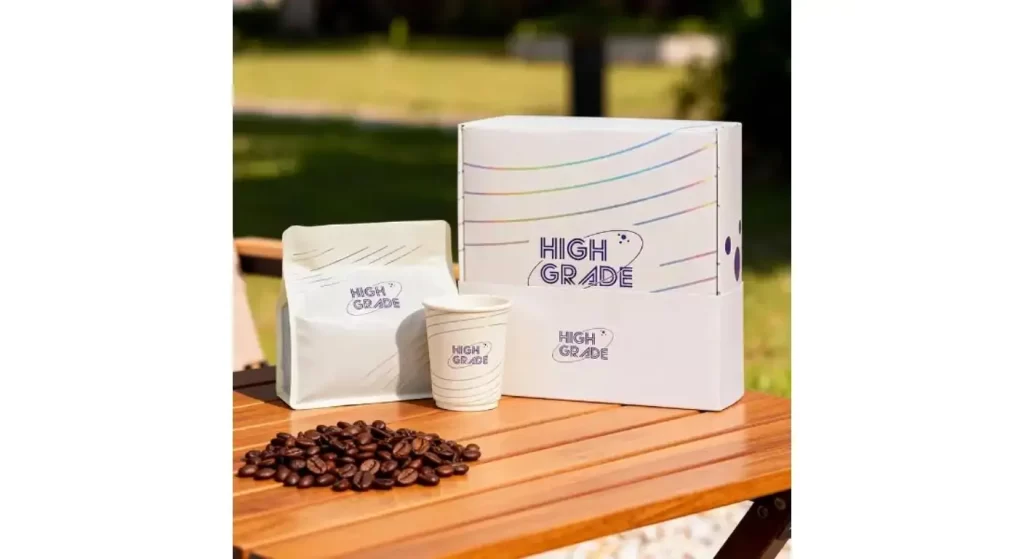
YPAKs custom holographic coffee packaging set demonstrates how coffee bags, Pappbecher, and boxes can share one visual treatment instead of appearing as unrelated products.
| Packaging touchpoint | Primary function | Fixed brand element | Variable information |
| Kaffeebeutel | Freshness and retail presentation | Logo, Typografie, base layout | Ursprung, Braten, Ablauf |
| Product label or card | SKU identification | Shape and design system | Verkostungsnotizen, batch |
| Einzelhandelsbox | Grouping and shelf display | Colors and visual hierarchy | Pack count, Produkttyp |
| Takeaway cup | Mobile brand visibility | Logo and core pattern | Cup size or campaign |
| Geschenkverpackung | Premium presentation | Brand story and finish | Occasion or recipient |
| Shipping carton | Delivery protection | Brand mark and handling style | Order and logistics data |
Select the Primary Packaging Around the Coffee
Choose the package that protects the coffee before selecting decorative secondary packaging.
Whole-bean coffee is commonly packed in flat-bottom, Stand-up, or side-gusset bags with suitable barrier layers. A resealable zipper may improve storage after opening, while a one-way degassing valve may be needed for freshly roasted beans.
Ground coffee can require stronger protection from oxygen and moisture because of its greater exposed surface area. Sample portions and drip coffee products need smaller formats with accurate and reliable seals.
YPAKs custom packaging builder helps brands compare bag styles, Größen, Materialien, Druckmethoden, Ventile, and sustainability options for different coffee products.
Add Secondary Verpackung Only When It Has a Clear Purpose
Boxen, Ärmel, and carriers should solve a practical problem. They may group several sachets, support a flexible pouch, improve gift presentation, provide more information, or create a stronger retail display.
Do not add a box simply to make a product appear more premium. Unnecessary secondary packaging increases material use, shipping volume, Montagezeit, and disposal complexity.
An insert can hold products securely and control the opening sequence of a gift set. A sleeve may provide sufficient branding for a retail coffee pouch without fully enclosing the primary bag.
YPAKs box and bag sleeves show how a compact printed component can adapt an existing packaging system for seasonal products or different markets.
Develop a Flexible Visual System
A packaging system needs both fixed and variable components. Fixed elements may include logo position, Typografie, background style, Abschlüsse, and core brand colors. Variable elements can identify origin, Braten, Ablauf, Verkostungsnotizen, and pack size.
Use a clear information hierarchy:
- Markenname
- Coffee or product name
- Origin and roast information
- Nettogewicht
- Brewing and storage instructions
- Required legal information
Color coding can help customers distinguish products, but it should not be the only identifier. Product names and other essential information must remain readable.
Plan for Multiple SKUs
New origins, seasonal microlots, Kooperationen, and decaffeinated coffees can create packaging inventory problems. Producing a completely different printed bag for every short-life coffee may leave significant obsolete stock.
A scalable system can combine a shared master bag with variable labels or cards. Digital printing suits smaller volumes and multiple designs, while gravure printing is generally better for stable products and higher quantities.
YPAK coffee packaging options include stock bags with labels, Hot Stamping, card slots, Digitaldruck, and gravure printing. This allows brands to choose a customization level that matches each product's expected sales life.
Connect the Verpackung to the Sales Channel
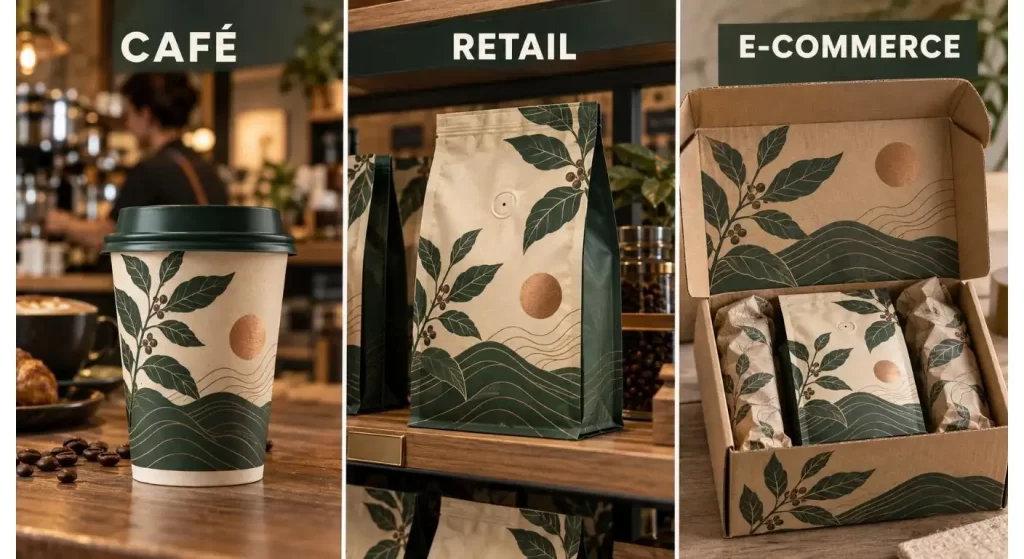
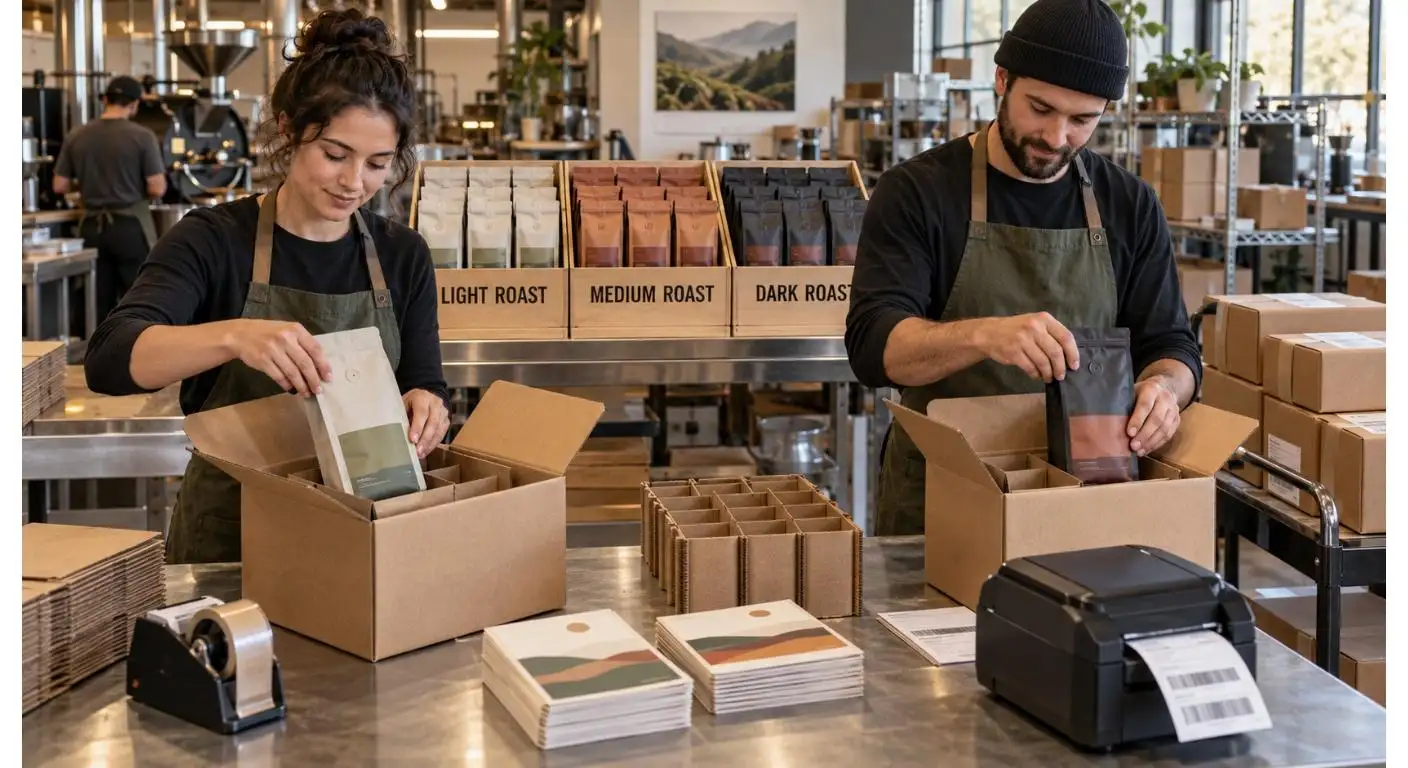
Retail packaging needs strong shelf recognition and information that is readable from a distance. E-commerce packaging must withstand fulfillment, Kompression, Vibration, and repeated handling. Subscription packaging should make several products easy to identify and unpack.
Café packaging has different priorities. Cups and carriers must support fast service, while retail coffee bags should remain easy for customers to store after opening.
Export projects must also consider shipping-carton dimensions, Paletteneffizienz, language versions, Barcodes, und Anforderungen an den Zielmarkt. Test the complete packaging system in the channel where it will actually be used.
Make Nachhaltigkeit Claims Specific
Material selection should balance barrier performance, Stärke, Aussehen, and the intended end-of-life route. Recycelbar, Kompostierbar, PCR-containing, and FSC-certified packaging describe different attributes.
Do not use these terms interchangeably or assume that one attribute applies to the entire package. A recyclable coffee bag, Pappschachtel, Etikett, and valve may each require separate material verification.
Design should also remove unnecessary size and components. A right-sized package that protects the coffee reliably may offer greater practical value than an elaborate structure with unclear environmental benefits.
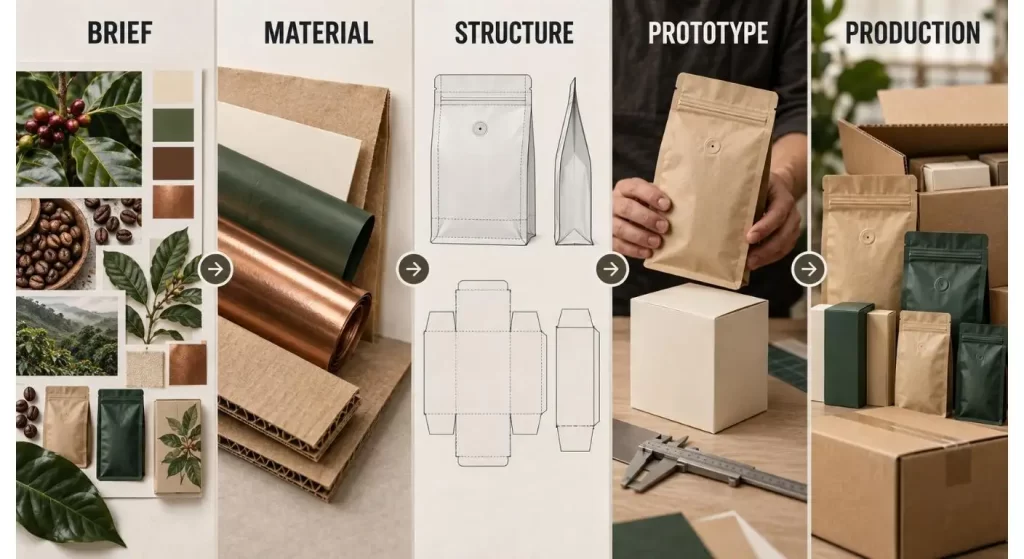
Prototype the Vollständig Erfahrung
Review more than an artwork PDF. Fill the bag with actual coffee, place it in the intended box, apply the label, close the shipping carton, and repeat the same steps that staff and customers will perform.
Check:
- Filled dimensions
- Seal and valve position
- Opening and resealing
- Product identification
- Box and insert fit
- Cup and lid compatibility
- Barcode-Lesbarkeit
- Packzeit
- Schiffsschutz
- Disposal instructions
YPAKs sample policy allows brands to test materials and structures before committing to full production.
Prepare a Controlled Launch Plan
A new brand does not need every packaging format on its first day. Begin with the packaging required for the main revenue-generating product, then extend the approved visual and material system to secondary product lines.
Document approved colors, Materialien, Stempellinien, Abschlüsse, Abmessungen, Lieferanten, and artwork versions. This becomes the packaging specification for repeat orders and future expansion.
After launch, collect feedback from packing staff, Einzelhändler, and customers. Real use can reveal problems that are not visible in a studio mockup.
Schlussfolgerung
Custom coffee packaging is not simply a collection of attractive packages; it is a coordinated system. It protects coffee quality, guides consumers, supports different sales channels, and creates room for future products within the brand.
Begin with the coffee, map customer touchpoints, define fixed and variable design rules, and prototype the complete experience. YPAK provides coffee bags, Boxen, Tassen, Zubehör, Druck, and sampling support for brands developing coordinated packaging systems.
FAQ
F1. What can be customized in coffee packaging?
Brands can customize dimensions, Struktur, Material, Druck, beenden, Ventil, Box, Etikett, Insert, and accessory systems. Available options depend on the product, Bestellmenge, und Herstellungsmethode.
F2. Should the coffee bag or coffee box be designed first?
Design the primary coffee bag first because it determines freshness protection and filled dimensions. Develop the box or sleeve around the approved filled bag.
F3. Can one design system work across bags, Boxen, und Becher?
Ja, but the artwork must be adapted for each format. Use consistent colors, Typografie, and information hierarchy instead of copying the same layout without adjustment.
F4. How can a small brand manage multiple coffee origins?
Use variable labels, Karten, or digital printing with a shared master package. This reduces surplus inventory while keeping the product range consistent.
F5. Is all coffee packaging recyclable?
Nein. Recycelbar, Kompostierbar, PCR-containing, and certified paper materials have different definitions and disposal routes. Environmental claims should be verified for every packaging component.
Q6. Was ist die Mindestbestellmenge?
Die Mindestbestellmenge ist 1,000 Stücke. Die endgültigen Anforderungen können je nach Verpackungsgröße variieren, Material, Struktur, Druckverfahren, und Individualisierungsspezifikationen.
Geschrieben von
ypak.coffee
ypak
DIE YPAK PACKAGING GROUP wurde gegründet in 2011 und gebildet mit 3 Unternehmen mit Sitz in Hongkong, Dongguan und Foshan. Wir sind zu einem der größten Hersteller von Kaffeesäcken in China geworden. Wir verwenden die besten WIPF-Ventile aus der Schweiz, um Ihren Kaffee frisch zu halten.
Halte dich an die Plastikverbotspolitik ein, die in vielen verschiedenen Ländern verhängt wurde, Wir haben nachhaltige Verpackungstüten erforscht und entwickelt, wie RECYCELBARE und KOMPOSTIERBARE Beutel.
Keine Mindestmenge, Farbplatten sind bei unserem HP 25K INDIGO DIGITALDRUCKSERVICE KEINE FARBPLATTEN ERFORDERLICH..
Sie sind herzlich eingeladen, YPAK zu besuchen.
Verwandte Artikel
Coffee Subscription Box Packaging: Ein Leitfaden zur Erfüllung, Frische, und Retention
Individuelle Kaffeeverpackungsboxen: Ein praktischer Leitfaden zur Struktur, Schutz, und Unboxing
Individuelle Kaffeeverpackung: Wie man ein vollständiges Markensystem aufbaut