Aktualisierte 2 Stunden vor
Individuelle Kaffeeverpackungsboxen: Ein praktischer Leitfaden zur Struktur, Schutz, und Unboxing

ypak.coffee
DIE YPAK PACKAGING GROUP wurde gegründet in 2011 und gebildet mit 3 Unternehmen mit Sitz in Hongkong, Dongguan und Foshan. Wir sind zu einem der größten Hersteller von Kaffeesäcken in China geworden. Wir verwenden die besten WIPF-Ventile aus der Schweiz, um Ihren Kaffee frisch zu halten.
Halte dich an die Plastikverbotspolitik ein, die in vielen verschiedenen Ländern verhängt wurde, Wir haben nachhaltige Verpackungstüten erforscht und entwickelt, wie RECYCELBARE und KOMPOSTIERBARE Beutel.
Keine Mindestmenge, Farbplatten sind bei unserem HP 25K INDIGO DIGITALDRUCKSERVICE KEINE FARBPLATTEN ERFORDERLICH..
Sie sind herzlich eingeladen, YPAK zu besuchen.
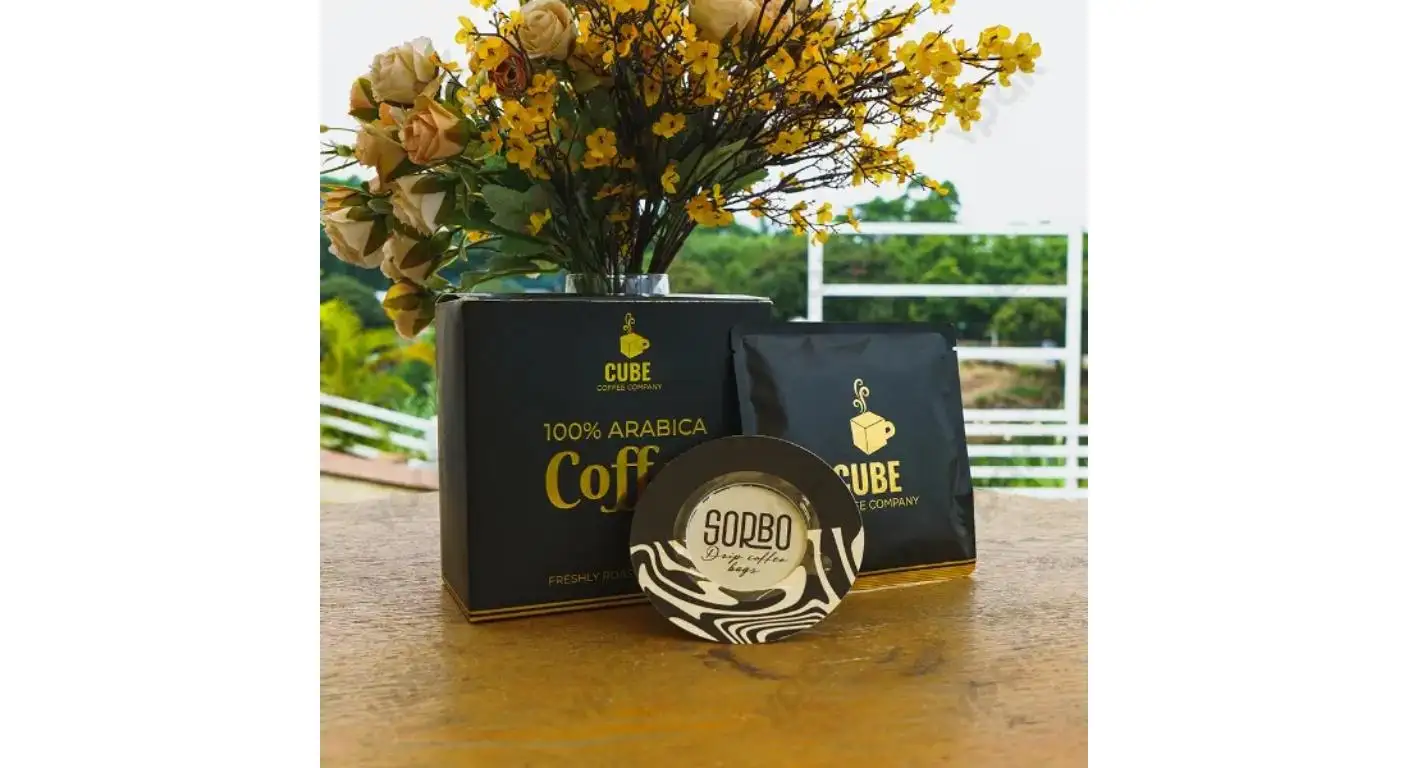
maßgefertigte Kaffeeverpackungsboxen
A coffee box consists of more than just an outer printed box. It should securely contain the product, convey its merits, and be useful during all stages of filling, Lagerung, transportation and retail display.
For specialty roasters or gift coffee brands, the best custom coffee packaging boxes start with structure and surface decoration comes second. The box should take into account the coffee format, Verpackungsprozess, retail outlet, and the experience the consumer will have upon opening the coffee box.
What should a Coffee Verpackung Box Do?
Each box should have three fundamental roles: to safeguard the coffee product, to present it neatly, and to bolster the brand's stance.
The structure of the box for 10 drip coffees is different to that of a rigid box filled with coffee bags, cups and accessories. Decide what the box is going to be used for before selecting a style – retail shelves, Gifting, subscriptions or direct to consumer.
Nearly all of the decisions are influenced by the sales channel. Clear front-facing communication is required for retail boxes, and better corner control and movement for ecommerce boxes. Gift boxes typically focus on how the gift is opened and what it could be worth to the recipient.
Use the Product, NICHT the Box Dimensions.
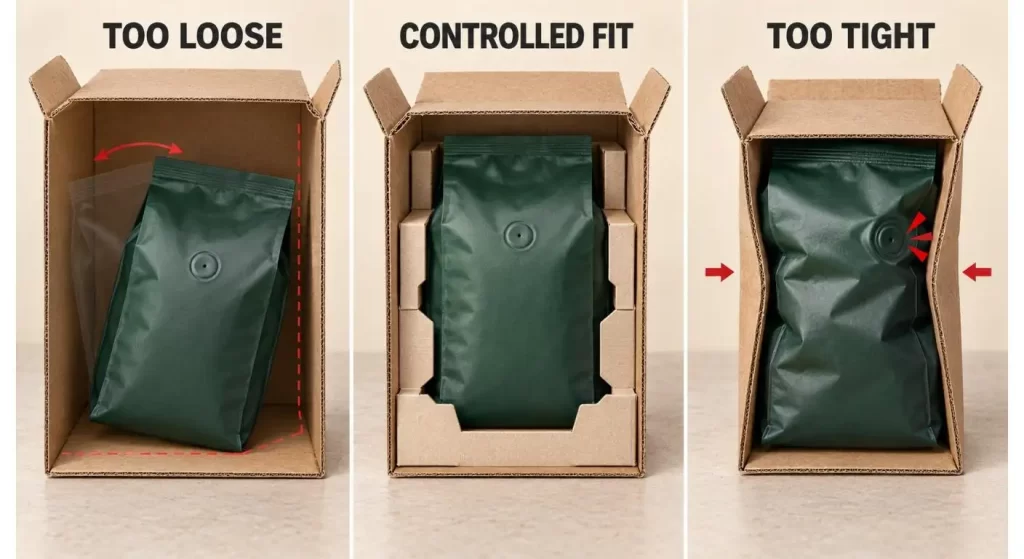
Final box size should be determined by the product that is in the box, not an empty coffee bag or sachet. Flexible bags open up after filling, and valves and seals, folded tops will change the space they require.
Once full fill, measure the widest, tallest and deepest points of the product. If there are multiple units, place physical samples in the desired packing sequence prior to size verification.
Too much space can lead to a shift in products and can make the presentation appear incomplete. Lack of space can cause coffee bags to contract, damage valves, or slow the hand packing process. The purpose is to control the clearance so it is done efficiently and without activity being visible.
Das custom printing drip coffee box by YPAK gives a good guideline for the five pack and ten pack carton sizes for individual drip coffee products.
Which Box is the Best Structure for the Product?
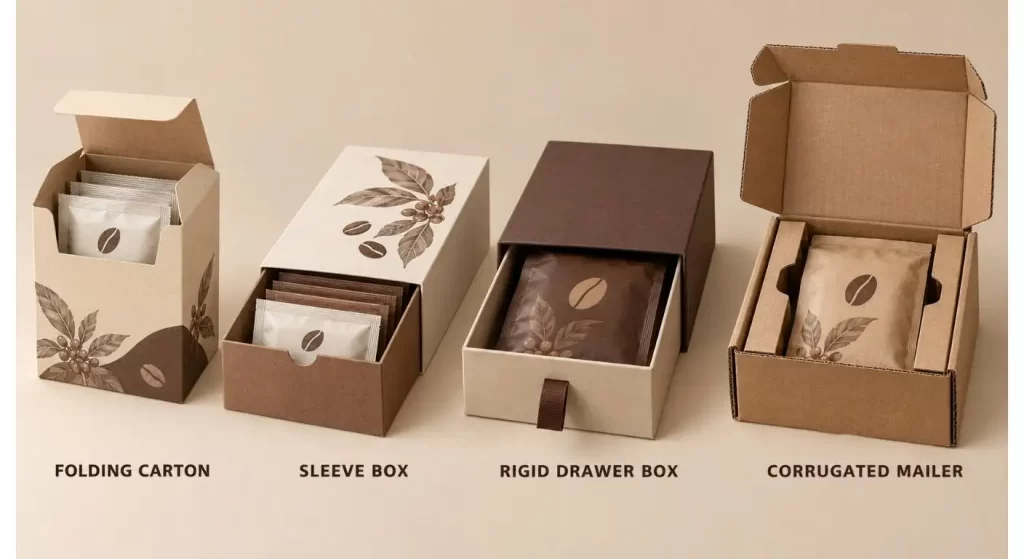
Folded cartons are suitable for lightweight drip sachets, capsules or for small retail pieces. These are delivered "Flach" and take up less space than traditional "boxed" models, and are capable of efficient batch assembly.
Sleeve and tray boxes are more deliberate, and work better for tasting sets or only a few boxes. Rigid containers provide a higher perceived value, but come at a higher material, shipping and storage expense. When the same structure needs to be used to handle ecommerce delivery, corrugated mailer boxes are more suitable.
Products sold at premium prices may be of uncommon shapes and thus need a special structure. Das UFO-Kaffeefilterbox is one such example, as it's a rigid format that's been created around a unique product which is brewed.
How to Control Product Movement Using Inserts?
Useful when there are many products in a box, fragile accessories or products that need to be kept in a certain position when displayed. They do not only serve a decorative role, but also help to keep the spacing regular and minimize the likelihood of movement within the interior.
For the dividers, paperboard are appropriate for sachets and light accessories. Paper inserts with a cut-out shape can be used to hold coffee bags, drippers, cups or tasting cards in place. Some molded plastic pieces can offer an exact fit, but there are also paper-based options that could offer a more uniform look and feel.
Don't use large inserts just to enlarge a small product. There is no need for unnecessary material which will only drive up costs and possibly dilute the brand's sustainability message. Each insert should have a definite protective and/or organizational purpose.
Develop and test the Opening Sequence.
A great unboxing journey takes the customer on a purposeful path of information and products. Externally, the recognition is provided; the first opened panel introduces the story; the internal arrangement shows the hierarchy of the product.
Significant information shouldn't be hidden behind taking off all the items. Printable inside lid or on a separate card with Brewing Instructions, Origin Details, Roast Information or Gift Messages.
The opening should be easy to use as well. It is easy to envision a unique lock on a digital model but difficult to imagine the same lock in reality fitting the sleeve tightly enough to cause customer frustration.Unique locks may look great on a digital model, but when it comes to real life, the lock might not be tight enough for the sleeve, causing customer frustration. Premium packaging should be under control not difficult.
The retail, gifting and ecommerce presentation opportunities are all possible with the maßgefertigt bedruckte Kaffeeboxen, enabling the structural experience to continue along the sales path.
Match Materials and Finishes to Handling Conditions
The thickness of paperboard should be in accordance with the box size, total filled weight and stacking conditions. Drip sachets may be constructed of light weight carton or larger gift sets may be constructed with a sturdier board or reinforced rigid construction.
Handling as well as appearance should be considered in the selection of finishes. Matte surfaces can give a chic appearance, but may exhibit abrasion on dark finishes. For frequently handled retail environments, the resistance may be enhanced by applying a gloss or protective coating.
If sustainability is forefront of the product, keep the materials combination simple. A coordinated solution like YPAK's biodegradable coffee bag solution can help to synchronize the coffee bag, paper box and supporting packaging elements.
Consider Packing und Logistics Before Production
An attractive box can be a cumbersome solution. Brands need to estimate the volume of package space that is wasted on empty packages, their rate of box assembly and the insertion type (pre-glued or flat).
Flat-packed cartons typically decrease the amount of inbound freight and warehouse space. Rigid boxes are pre-assembled and will take up more room, but can help reduce end-user packing time. Order volume, labor costs and storage space are factors to consider for these trade-offs.
The size of the finished carton should also be taken into consideration when planning shipping cartons. Any increase in carton use can make a big difference in carton utilisation when scaled up across a wholesale order, even if it's only a small increase in the depth of a carton.
What tests do you use to check the finished box?
The physical prototype should be tested using the actual products filled. Verify fit, Druck, retention, assembly time and box cosmetic after a number of handling.
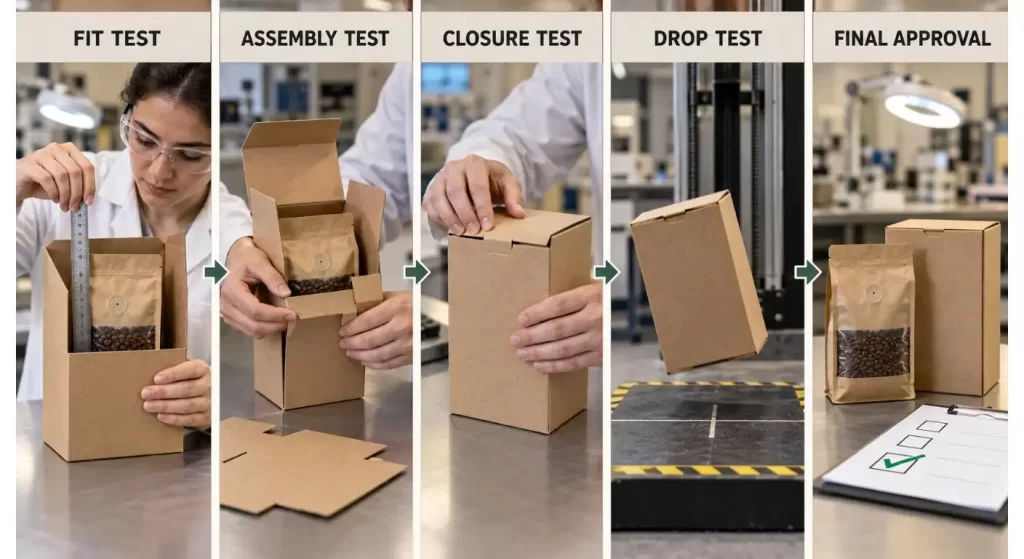
Test the entire shipment, not just the retail box for ecommerce usage. No amount of fancy inner box or padding can make up for the shipping carton that is too small for the product and is not properly padded.
In cases where possible, color and structure must be approved on physical samples. Before moving on to volume production, brands can find out what’s happening in the sampling stage with the help of YPAK's sample policy.
In this section, you should insert the “Coffee Box Prototype Test Checklist” below and move on to the next section.
| Testgegenstand | Simple Method | Approval Standard | Risk Identified |
| Produktanpassung | Insert all filled products | Easy insertion with minimal movement | Crushing or loose contents |
| Schließung | Open and close five times | Panels remain aligned and secure | Weak tabs or excess pressure |
| Insert-Retention | Rotate and gently shake box | Products stay in assigned positions | Disordered presentation |
| Assembly | Time ten manual assemblies | Consistent and practical workflow | High packing labor |
| Schifffahrt | Pack and perform a trial delivery | No crushed corners or abrasion | Transit damage |
| Shelf presentation | View from customer distance | Brand and product type are clear | Weak retail recognition |
Was should be in the Supplier Brief.
Some of the information that should be included on a useful supplier brief is the filled product size, quantity of product per box, bevorzugte Struktur, board requirements, Layout einfügen, printing requirements, Zielmarkt, expected order quantity and shipping method.
Indicate if the box is to be filled by hand and/or machine. For products that are a part of a gift collection, specify the order of the items in the gift and the location of each item.
Providing a physical sample of the coffee bags or products allows the manufacturer to pinpoint fit issues before tooling and mass production start.
Schlussfolgerung
The ideal custom coffee packaging boxes strike the ideal balance between style and form. They fit the product they're being used with, eliminate the need for excess movement, make packing efficient and make an opening sequence suitable to the brand.
Validation of Model: Abmessungen, Einsätze, Materialien, logistics and prototypes before production means that coffee brands can prevent oversized packaging, costly structural changes, and ensure better customer experience.
FAQ
Q1. Which box shape would be the most desirable for drip coffee bags?
It is recommended to use folding cartons, which are typically lightweight, small and easy to store. Tasting sets can be presented in a more upscale way using sleeve boxes.
Q2. Should there be an insert in coffee packaging boxes?
Nicht immer. Uses inserts where more than one product needs to be held in place or where the box has accessories; does not use inserts unless a protection or organizational function.
Q3. Is it possible to ship gifting boxes for coffee without the outer carton?
Usually not recommended. Coffee boxes can be scratched or crushed in transit or opened during delivery, thus the main protection is needed to be provided by a suitable shipping carton.
Q4. If size of the box is dependent on an empty coffee bag, what should be the dimensions of the box?
Nein. – Dimensions should be checked in sealed, full bags as the volume, valves and top seal will affect the shape of the product.
Q5. Is it possible for environmentally-friendly coffee boxes to also appear high-quality?
Ja. With well engineered paper structures, judicious printing, tight fit and carefully considered opening details, quality can be achieved without too much of a mixed media approach.
Q6. Was ist die Mindestbestellmenge?
Die Mindestbestellmenge ist 2,000 Stücke. Die endgültigen Anforderungen können je nach Verpackungsgröße variieren, Material, Struktur, Druckverfahren, und Individualisierungsspezifikationen.
Geschrieben von
ypak.coffee
ypak
DIE YPAK PACKAGING GROUP wurde gegründet in 2011 und gebildet mit 3 Unternehmen mit Sitz in Hongkong, Dongguan und Foshan. Wir sind zu einem der größten Hersteller von Kaffeesäcken in China geworden. Wir verwenden die besten WIPF-Ventile aus der Schweiz, um Ihren Kaffee frisch zu halten.
Halte dich an die Plastikverbotspolitik ein, die in vielen verschiedenen Ländern verhängt wurde, Wir haben nachhaltige Verpackungstüten erforscht und entwickelt, wie RECYCELBARE und KOMPOSTIERBARE Beutel.
Keine Mindestmenge, Farbplatten sind bei unserem HP 25K INDIGO DIGITALDRUCKSERVICE KEINE FARBPLATTEN ERFORDERLICH..
Sie sind herzlich eingeladen, YPAK zu besuchen.
Verwandte Artikel
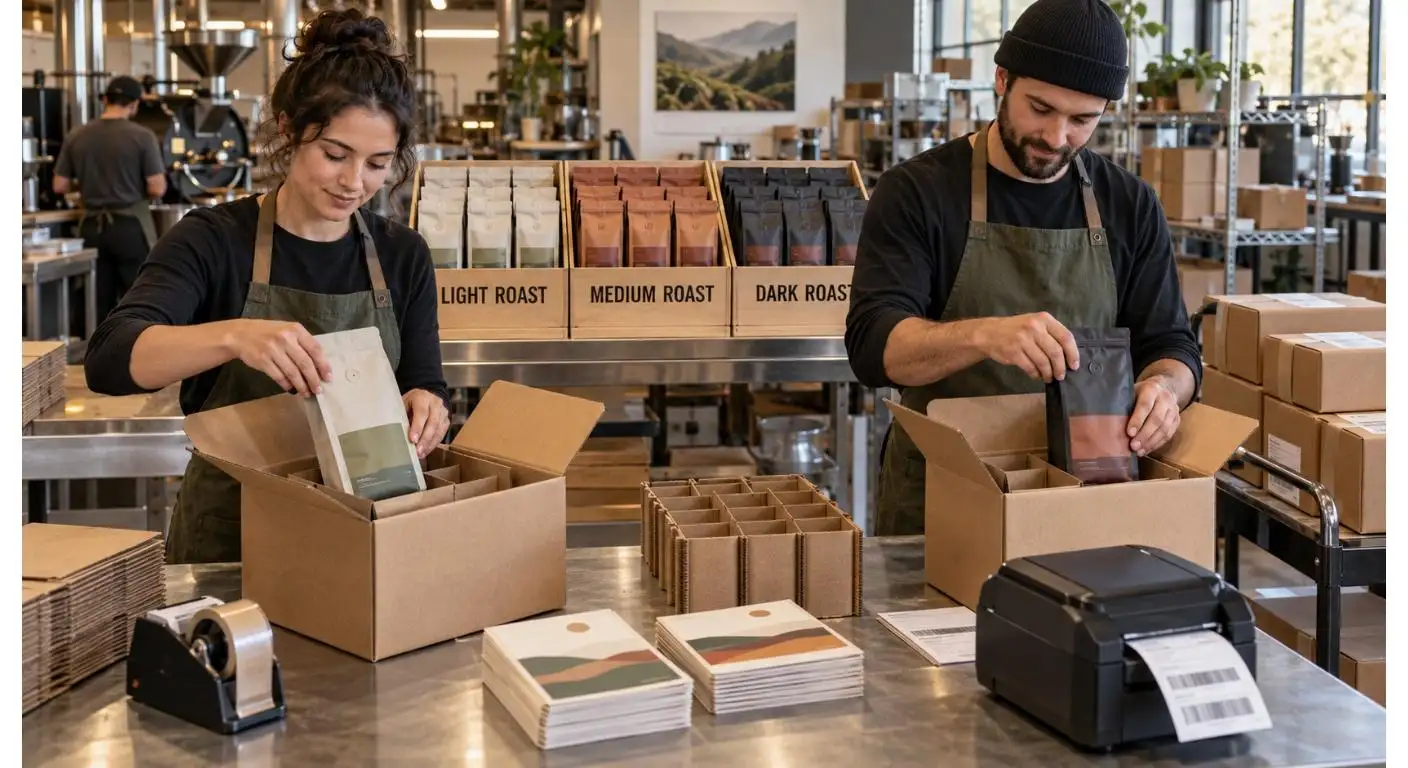
Coffee Subscription Box Packaging: Ein Leitfaden zur Erfüllung, Frische, und Retention
Individuelle Kaffeeverpackungsboxen: Ein praktischer Leitfaden zur Struktur, Schutz, und Unboxing
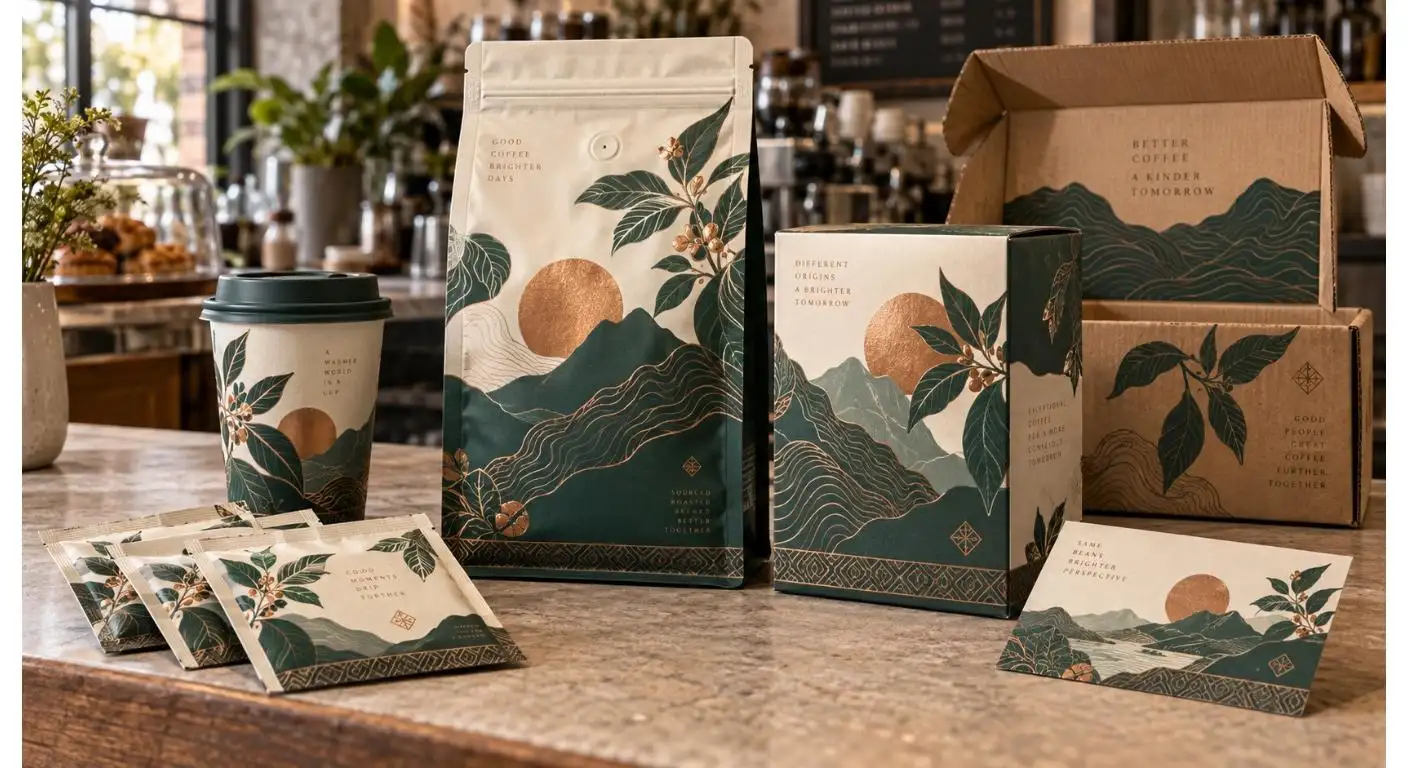
Individuelle Kaffeeverpackung: Wie man ein vollständiges Markensystem aufbaut