Aktualisierte 7 Stunden vor
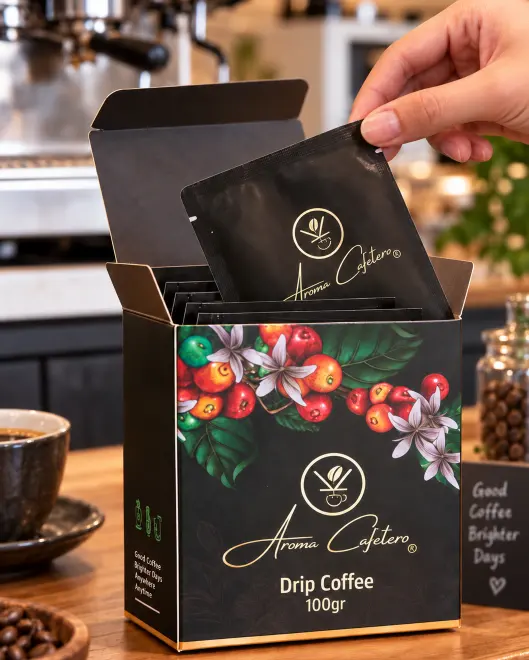
Verpackung von Kaffeekapseln-Boxen: Einzelhandelskartons verpackte Papierkapseln.

ypak.coffee
DIE YPAK PACKAGING GROUP wurde gegründet in 2011 und gebildet mit 3 Unternehmen mit Sitz in Hongkong, Dongguan und Foshan. Wir sind zu einem der größten Hersteller von Kaffeesäcken in China geworden. Wir verwenden die besten WIPF-Ventile aus der Schweiz, um Ihren Kaffee frisch zu halten.
Halte dich an die Plastikverbotspolitik ein, die in vielen verschiedenen Ländern verhängt wurde, Wir haben nachhaltige Verpackungstüten erforscht und entwickelt, wie RECYCELBARE und KOMPOSTIERBARE Beutel.
Keine Mindestmenge, Farbplatten sind bei unserem HP 25K INDIGO DIGITALDRUCKSERVICE KEINE FARBPLATTEN ERFORDERLICH..
Sie sind herzlich eingeladen, YPAK zu besuchen.
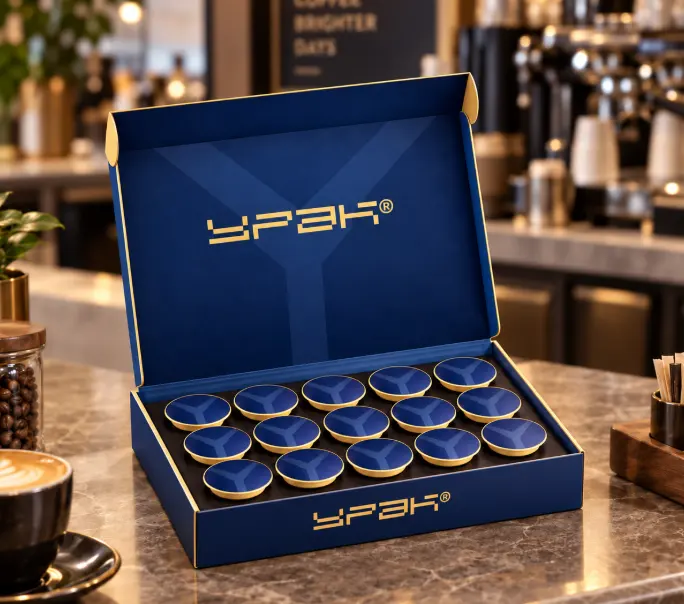
The packaging of coffee pod boxes must be compatible with the product that is placed in the carton. In the case of a paper coffee pod, it is typically a square or rectangular envelope that is closed, not a round filter pod as shown once opened. The friction of its surface and its filled thickness, along with its seal width, determine the way the pack loads and dispenses as well as stands.This difference is important since the rigid plastic or aluminium capsules are also referred to as pods. The cups should have some space around a rim and foil lid. Wrapped paper pods are more of a thin flexible pack. A useful carton starts with that difference and with a definite choice as to whether the box will be kept up on a shelf or go on working after being opened.
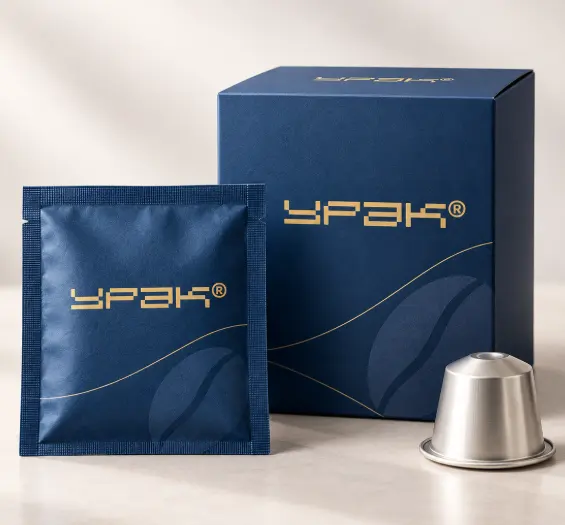
Determine the Coffee Pod Before the Box design.
Define the product and then select a carton style. Note the type of product, Zum Beispiel.., soft paper pod, compressed ESE-style pod or any other format. Include the pod diameter, the system you wish to brew with and any approved compatibility wording. A buyer should not be left in a position to identify the system by a photograph alone.
Keep hard capsules outside this specification. Projecting rim and foil lid form a capsule cup that forms various contact points and tolerances to packing. Keep the two formats separate so a paper-pod carton does not inherit an insert or clearance intended for a different product.
Measure the Sealed Outer Envelope.
The brewing part can be the round pod, but the retail unit is the sealed envelope that is packed on the packing table. Measure some of the filled envelopes of regular production. One part may be thicker or less flat than another due to film tension, position of seal and confined air.
Note the dimensions controlling the fit.
- Maximum normal envelope width and height.
- Record the centre thickness of the filled centre and a second thickness across overlapping edge seals.
- Top, side and bottom seal widths.
- Opening clearance, date-code area and print-safe zones.
- Finish of the surface and which way the envelope slides the most easily.
Take those measurements and use them to create viable internal space. A carton that is based only on the nominal pod diameter may catch the envelope seals or hold the row so loosely that the portions lean after transport.
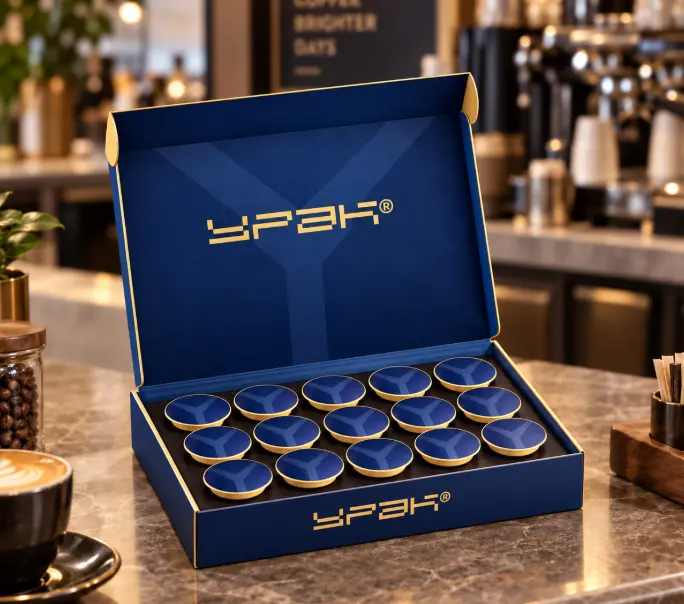
Select the Pod Count and Packing Direction.
The count and orientation are to be determined jointly. A short trial pack might require that there be only one upright row, whereas routine pack can utilize a deeper row or two controlled groups. Put the entire count in the suggested direction and leave the envelopes to rest without squashing them into an ideal block.
Check the row and then approve the arrangement.
- Lay a complete set with all seams facing similar and record any developing tilt.
- Packing order can be simple, allowing alternating envelopes to even out the pack.
- When they lose the desired flavour sequence, or drift apart, separate two groups.
Compare Retail Carton and Dispenser Box.
A standard tuck-end carton is applicable to a pack, which is picked off a shelf, brought home and opened when required. It is capable of shipping flat and offers continuous product identity, count and brewing data panels. The test on reclosure is done in case the customer will continue using the box.A dispenser carton is placed when one pod is picked at a time on a kitchen or hospitality counter. The front can be tear-away or a controlled top entry. It must open only one envelope, without letting the rest of the row fall forward. An added perforation should improve use, not serve only as a visual enhancement.
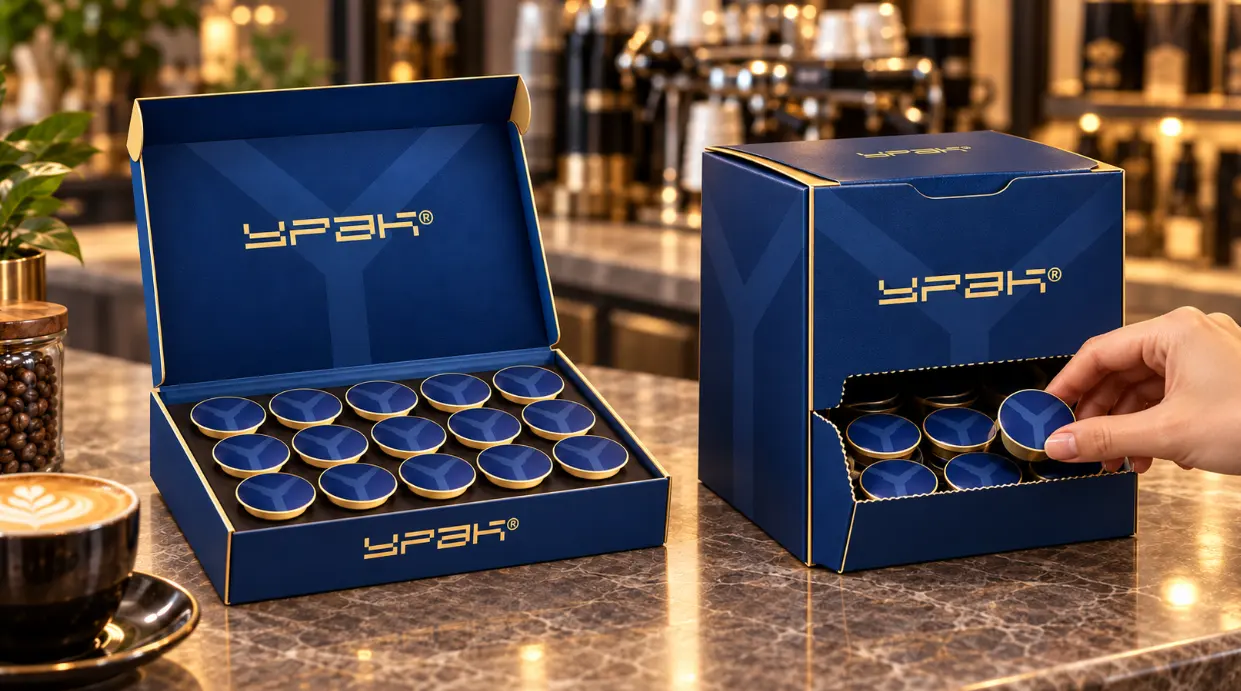
Design Access between the First Pod and the Final Pod.
The opening should be obvious before the customer reads an instruction. Measure the grip point, tear direction and left edge post-removal of a panel. The perforations should not be difficult to release and leave the important copy or rough edge against the envelopes.
Remove the first pod with the box in its normal position. The user should not have to shake or tip the carton. Keep on until the last envelope is reached. The last pod can be concealed by a high front wall or folded base flap where the entire box seemed convenient.
Check the Box When Half Empty.
A row filled is more stable than a half full. Check the carton when it is full, half-full and almost empty. Versiegelt es, move it the way it would be treated and put it back to the desired shelf or counter space. The remaining envelopes should stay visible and must not slip into an unused cavity.
It is not mechanical dispensing. A simple paperboard stop and opening height and a proportion may be sufficient to follow the row. An additional plastic or spring element is unnecessary when the carton geometry can be able to offer credible access independently.
Prepare Mixed Flavours without Scrambling.
A variety pack requires an assortment rule, which can be adhered to in the production process and interpreted by the purchaser. When the flavours are grouped, display the sequence on an opening or side panel. When they are deliberately blended, specify the amount of each flavour as opposed to giving an order which the packing process cannot keep.
Same names, colours or symbols on the envelope and carton. Colour must not be the only distinguishing feature. The flavour or roast name written also provides the customer with a second signal, and helps minimise packaging mistakes where multiple SKUs share a single visual system.
Distinct Compatibility and Flavour Information.
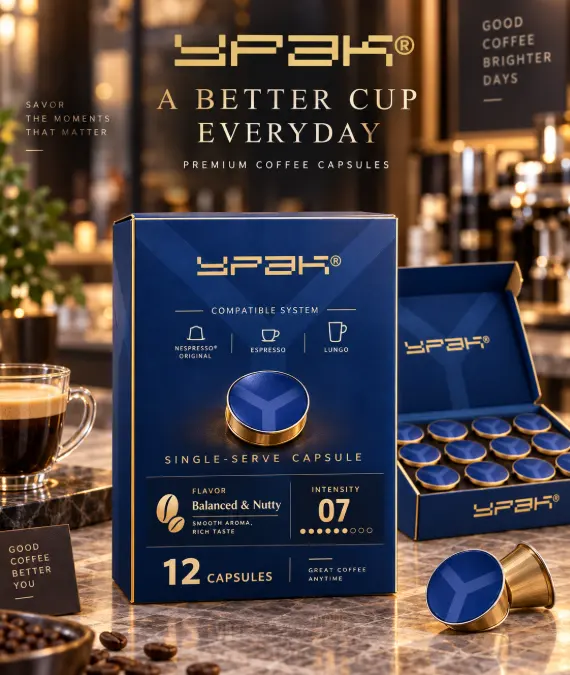
Compatibility determines the possibility of the use of the pod. Geschmack, roasting and country of origin assists the buyer in making a selection within the compatible zone. These messages are supposed to be positioned differently and in a definite order of reading. Place the pod format and approved system wording in a location where it is easily visible, and offer flavour and strength as product options.The number of pods should also be written on the front panel. The brewing instructions, product range, barcode and needed product can be transferred to secondary panels, but must be legible once a dispenser panel has been taken out.
Test Packing and Distribution using Real Pods.
How finished envelopes rub or catch cannot be determined by a clean white sample. Assemble the prototype using the target board that will be used and load production-representative pods. Next put made retail boxes in the shipping case proposed. The retail box and outer case must be considered as a single distribution channel.
Follow the use cycle of the pack.
- Fit each blank, and stuff the given number at the operator rate.
- Attach the chosen top or access panel, making sure that none of the seams have been pulled or pinched.
- Feel the packed case and check corners, openings and printed areas.
- Take away a piece at a time, and observe the earliest indication of inclination or snagging.
- The rest of the envelope must be in plain sight and free to lift without probing at the conclusion of the trial.
Note location of every failure. An issue at the second pod can have to do with the opening, and a failure closer to the end can be due to the base or left-over cavity. The next prototype is more helpful with each change in one variable.
Hold Production Specification.
Nach Genehmigung, retain the pod definition, filled-envelope range, count, loading direction, Board-Grade, Dieline, perforation pattern, Artwork-Version, shipping-case arrangement and physical sample. Repeats must be verified to this entire standard and not to an old quote or picture of the closed box.
To have a custom YPAK quote, submit filled samples or verified envelope sizes and clarify the sales channel. This provides the structural team a realistic ground on sizing and prototyping without presupposing that all products that have been termed as a coffee pod operate in a similar manner.
Schlussfolgerung
The standard coffee pod box packaging begins with the closed paper-pod envelope and the usage of the pack upon opening. Define the pod, measure normal variation in production, select a repeat arrangement and test access between the first and the last part. The completed carton is easy to pack, learn and re-order when compatibility, flavour information and distribution needs are done in isolation
FAQ
Geschrieben von
ypak.coffee
ypak
DIE YPAK PACKAGING GROUP wurde gegründet in 2011 und gebildet mit 3 Unternehmen mit Sitz in Hongkong, Dongguan und Foshan. Wir sind zu einem der größten Hersteller von Kaffeesäcken in China geworden. Wir verwenden die besten WIPF-Ventile aus der Schweiz, um Ihren Kaffee frisch zu halten.
Halte dich an die Plastikverbotspolitik ein, die in vielen verschiedenen Ländern verhängt wurde, Wir haben nachhaltige Verpackungstüten erforscht und entwickelt, wie RECYCELBARE und KOMPOSTIERBARE Beutel.
Keine Mindestmenge, Farbplatten sind bei unserem HP 25K INDIGO DIGITALDRUCKSERVICE KEINE FARBPLATTEN ERFORDERLICH..
Sie sind herzlich eingeladen, YPAK zu besuchen.
Verwandte Artikel
Verpackung von Kaffeekapseln-Boxen: Einzelhandelskartons verpackte Papierkapseln.
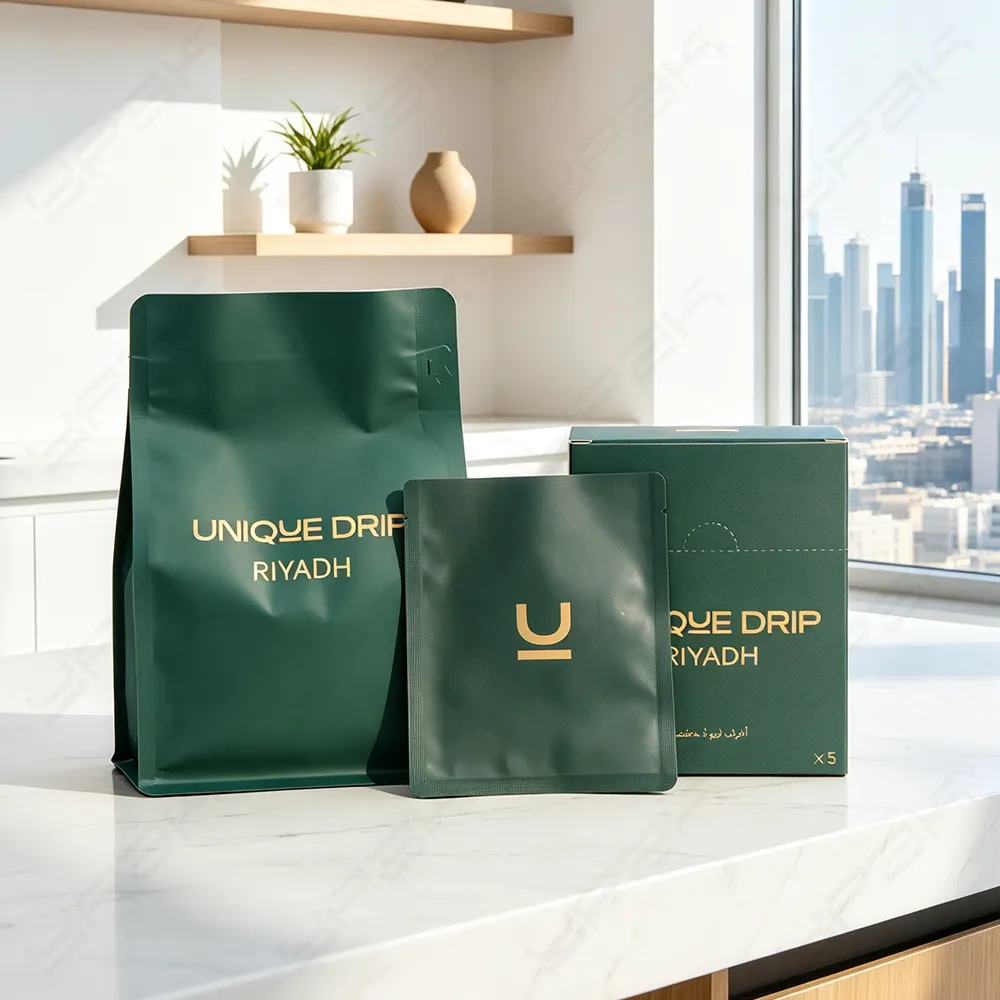
10 Pack Kaffeebox: Maßnahmen, Einsätze und Verpackungsanleitung.

5 Pack Kaffeebox: Aufbau eines kleineren Einzelhandelspakets 5 Sachets.